- Home
- China
- World
- Europe
- Politics
- Business
- Opinions
- Tech & Sci
- Culture
- Sports
- Travel
- Nature
- Picture
- Video
- Live
- TV
- Specials


Share







Copied
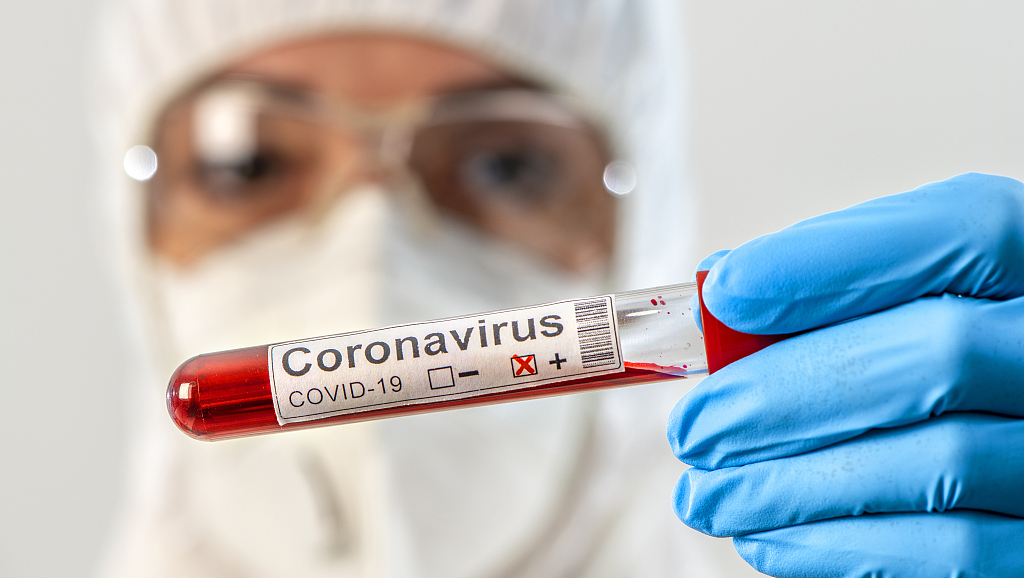
These studies, which have been peer reviewed, do not prove that humans develop immunity or how long it might last, but they are reassuring. /VCG
Studies conducted on monkeys shows that when the primates are infected with COVID-19 and they recover, they are likely to develop immunity from the disease.
The two studies published on Wednesday give a positive sign that the much sought after vaccine against the novel coronavirus may succeed.
Although scientists have assumed that antibodies produced in response to the new coronavirus virus are protective, there has been scant scientifically rigorous evidence to back that up.
In one of the studies, researchers infected nine monkeys with COVID-19 and they recovered. Afterwards, they were again exposed to the virus but they did not get sick.
The findings suggest that they "do develop natural immunity that protects against re-exposure," said Dr. Dan Barouch, a researcher at the Center for Virology and Vaccine Research at Harvard's Beth Israel Deaconness Medical Center in Boston, whose studies were published in the journal Science.
"It's very good news," Barouch said.
A second study involved 25 monkeys, all of which were tested using six prototype vaccines to see if antibodies produced in response were protective.
They were then exposed to the virus alongside 10 control animals.
All of the control animals showed high degrees of virus in their noses and lungs, but in the vaccinated animals, "we saw a substantial degree of protection," Barouch said. Eight of the vaccinated animals were completely protected.
These studies, which have been peer reviewed, do not prove that humans develop immunity or how long it might last, but they are reassuring.
"These data will be seen as a welcome scientific advance," Barouch said.
The world is currently focusing on the search for a vaccine against COVID-19 to end the devastation it causes.
The disease has infected more than 4.9 million people worldwide and killed over 324,000, according to the U.S.-based Johns Hopkins University.