- Home
- China
- World
- Europe
- Politics
- Business
- Opinions
- Tech & Sci
- Culture
- Sports
- Travel
- Nature
- Picture
- Video
- Live
- TV
- Specials


Share







Copied
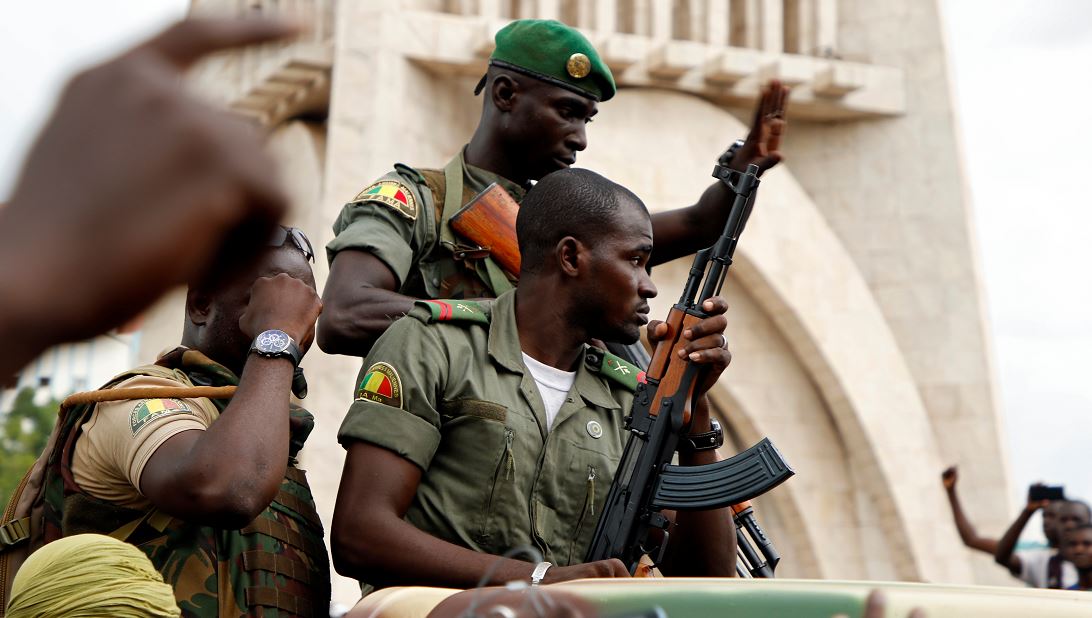
Coup leaders in Mali have released ousted President Ibrahim Boubacar Keita and he has returned home, his representative said on Thursday, a potential sign of good faith a day ahead of a regional summit on the country's political future.
A group of military officers, who call themselves the National Committee for the Salvation of the People (CNSP), has controlled Mali since August 18, when the mutineers detained Keita at gunpoint and forced him to resign.
Keita's release is one of the demands of Mali's international partners, including France and West Africa's regional bloc the Economic Community of West African States (ECOWAS), which sent a delegation to Bamako over the weekend to negotiate with coup leaders.
Keita "was freed this morning, (and) he has returned to his home," a spokesman for the junta Djibrilla Maiga said, without giving further details.
Keita's whereabouts could not immediately be confirmed. His residence in Bamako appeared deserted at midday with no sign of the usual security presence outside, a local resident said, asking not to be named.
The junta leaders say they mutinied because the country was sinking into chaos and insecurity which they said was largely the fault of poor governance.
They have promised to oversee a transition to elections within a "reasonable" amount of time.
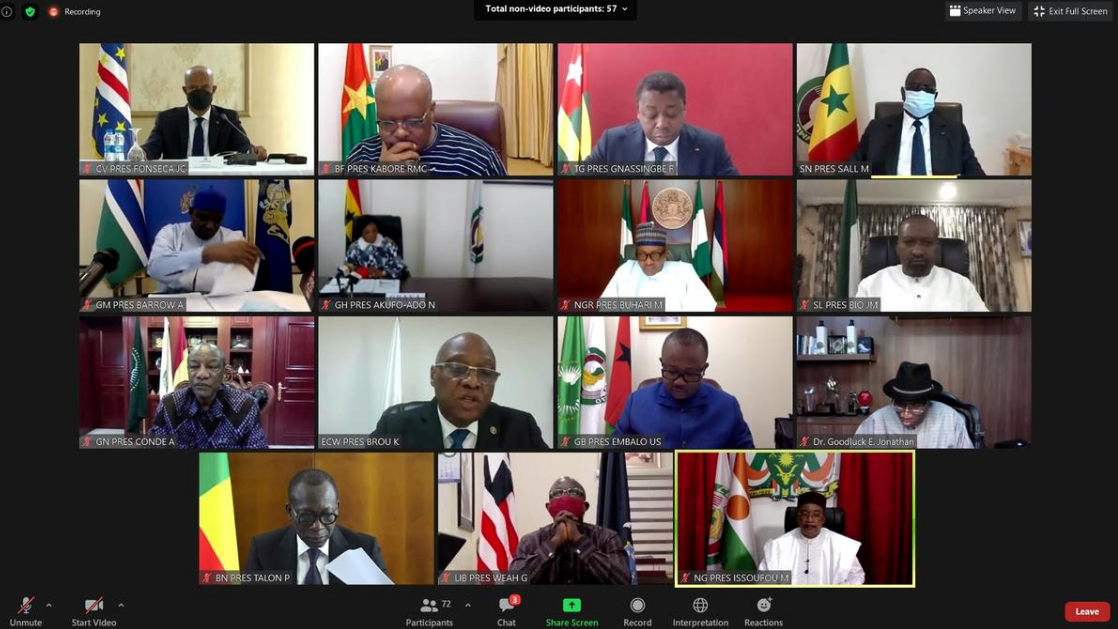
A screenshot shows a teleconference during the extraordinary Summit of the Economic Community of West African States (ECOWAS) Authority of Heads of State and Government on the Socio-Political Situation in Mali August 20, 2020. /Reuters
Earlier on Thursday, France's foreign minister Jean-Yves Le Drian told RTL radio the coup would not stop French military operations against Islamist militants active in central and northern regions, but urged a swift transition of power.
The CNSP told a delegation of West African mediators that they want to stay in power for a three-year transition period, Nigeria said on Wednesday.
In contrast, the ECOWAS is seeking for a transitional government of no more than one year.
The 15-nation ECOWAS has taken a hard line on the coup, shutting borders and halting financial flows.
Mali has struggled to regain stability since a Tuareg uprising in 2012 was hijacked by Islamist militants. Since 2018, the country has seen a sharp increase in violence and insecurity that has driven more than half a million people away from their homes.
(With input from agencies)
Related reading: Mali talks end with no decision on transitional government