- Home
- China
- World
- Europe
- Politics
- Business
- Opinions
- Tech & Sci
- Culture
- Sports
- Travel
- Nature
- Picture
- Video
- Live
- TV
- Specials


Share







Copied
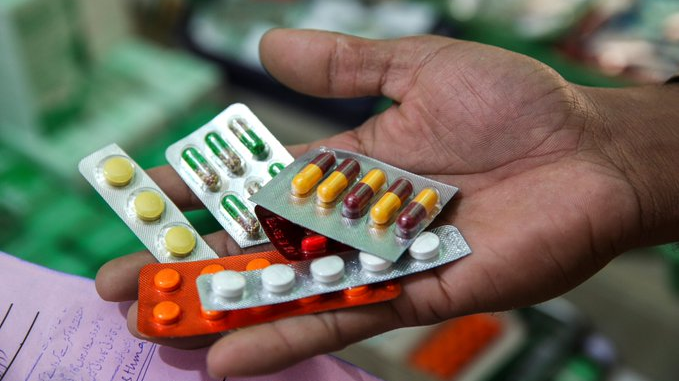
As the world marks the overdose awareness day, World Health Organization says, globally, about 0.5 million deaths are attributable to drug use. /WHO
As the world marks the overdose awareness day, World Health Organization says, globally, about 0.5 million deaths are attributable to drug use. More than 70% of these deaths are related to opioids, with more than 30% of those deaths caused by overdose.
According to WHO estimates, approximately 115 000 people died of opioid overdose in 2017. Opioid overdoses that do not lead to death are several times more common than fatal overdoses.
What are opioids?
The term“opioids”includes compounds that are extracted from the poppy seed as well as semisynthetic and synthetic compounds with similar properties that can interact with opioid receptors in the brain.
Opioids have analgesic and sedative effects, and are commonly used for the management of pain. Opioid medicines such as methadone and buprenorphine are used for maintenance treatment of opioid dependence.
After intake, opioids can cause euphoria, which is one of the main reasons why they are taken for non-medical reasons.
The number of opioid overdoses has increased in recent years in several countries, in part due to the increased use of opioids in the management of chronic pain and increasing use of highly potent opioids appearing on the illicit drug market.
In the United States of America (USA) the number of people dying from opioid overdose increased by 120% between 2010 and 2018, and two-thirds of opioid-related overdose deaths in 2018 in the USA involved synthetic opioids, including fentanyl and its analogues.
Fentanyl is a potent synthetic opioid that is used as a pain reliever and as an anaesthetic. It is approximately 50-100 times more potent than morphine.
Fentanyl in various formulations is on the WHO Model List of Essential Medicines. However, fentanyl and its chemically-similar analogues (including carfentanil, acetylfentanyl, butyrfentanyl, and furanyl fentanyl) have been associated with a spike in deaths from opioid overdose.
There is evidence that drug dealers may be adding fentanyl to increase the potency of their products (such as heroin) and selling fentanyl as counterfeit tablets, created to look like authentic prescription medications. Therefore, many users who test positive for fentanyl and its analogues do not realize that they took the substance.
WHO calls for rational use of opioids
WHO supports countries in their efforts to ensure rational use of opioids and their optimal availability for medical purposes and minimization of their misuse and non-medical use. Following the recommendation of WHO's Expert Committee on Drug Dependence, a number of fentanyl analogues have been placed under international control, which means rigorous regulation for their availability.
WHO continues to monitor several fentanyl analogues through its surveillance system for new psychoactive substances, alerting countries to the potential dangers associated with these substances. Collection of such data is important as information about the patterns of use, misuse and non-medical use of opioids is very limited.
WHO also supports countries in monitoring trends in drug use and related harm, to better understand the scale of opioid dependence and opioid overdose.
WHO recommends that naloxone be made available to people likely to witness an opioid overdose, as well as training in the management of opioid overdose.
In suspected opioid overdose, first responders should focus on airway management, assisting ventilation and administering naloxone.
After successful resuscitation following the administration of naloxone, the level of consciousness and breathing of the affected person should be closely observed until full recovery has been achieved.
(With input from World Health Organization)