- Home
- China
- World
- Europe
- Politics
- Business
- Opinions
- Tech & Sci
- Culture
- Sports
- Travel
- Nature
- Picture
- Video
- Live
- TV
- Specials


Share







Copied
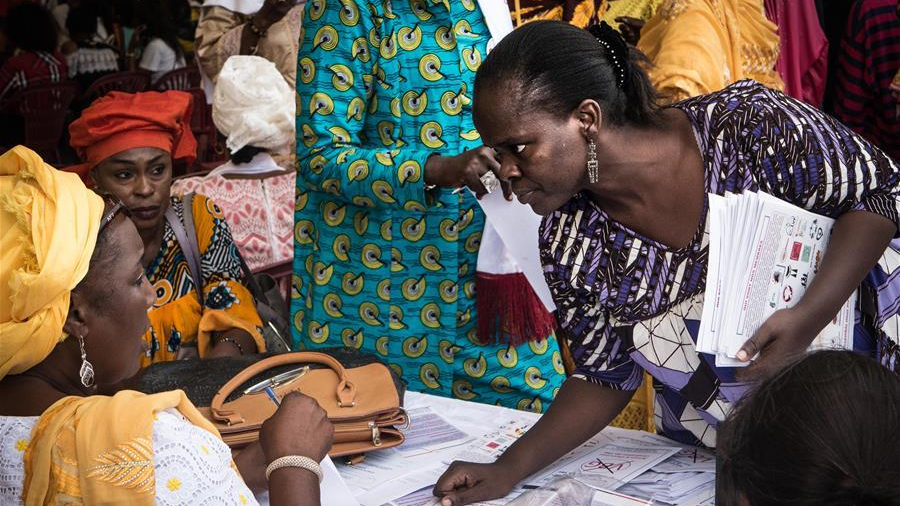
Senegalese women meet to celebrate the government project "16 days of activism against violence on women" in Dakar, Senegal, Dec. 9, 2019. /Xinhua
Highlighting the disproportionate and devastating socio-economic impact of COVID-19 on women and girls globally, The UN chief António Guterres called for a major push to prevent "years, even generations" worth of progress on women's empowerment, from being lost to the pandemic.
In an address to a virtual town hall with young women from civil society organizations, the Secretary-General said that the global pandemic has already reversed decades of limited and fragile progress on gender equality and women's rights.
"Without a concerned response, we risk losing a generation or more of gains", he cautioned.
Mr. Guterres underscored the vital role played by women, as healthcare workers, essential staff, teachers and carers, helping millions globally – both within and outside their homes.
However, few are recognized due to persisting inequalities and biases. At the same time, many women working in the informal sector have been thrown into financial insecurity, without regular income or effective social safety nets.
"The pandemic has exposed the extent of its impact on physical and mental health, education and labour force participation", said Mr. Guterres, amid disturbing reports from around the world of skyrocketing gender-based violence, "as many women are effectively confined with their abusers, while resources and support services are redirected".
"In short, the pandemic is exposing and exacerbating the considerable hurdles women face in achieving their rights and fulfilling their potential," he said.
Monday's town hall meeting is a regular fixture on the UN calendar, but generally organized on the side-lines of the annual session of the Commission on the Status of Women. This year, however, it was postponed due to the pandemic and held virtually, with thousands of women activists and defenders of women's rights participating remotely.
Women and girls at the centre of rebuilding
In his remarks, the UN chief recalled the UN's policy brief issued in April, which urged governments to put women and girls – their inclusion, representation, rights, and protection – at the centre of all efforts to tackle and recover from COVID-19.
The first phase, Mr. Guterres said, was for nations to take a "holistic view" of the pandemic's health impact.
"All women have a right to quality, affordable sexual and reproductive health services. Governments have a responsibility to make sure women and girls can access these services, even during a crisis", he said, calling for health systems that meet the needs and realities of all – including women and girls.
"This means prioritizing and funding primary health care and Universal Health Coverage," added the Secretary-General, while also prioritizing protection of women from gender-based violence in national COVID-19 plans.
(With input from United Nations)