- Home
- China
- World
- Asia-Pacific
- Americas
- Europe
- Middle-East and Africa
- Politics
- Business
- Opinions
- Tech & Sci
- Culture
- Sports
- Travel
- Nature
- Picture
- Video
- Live
- TV
- Specials
- Learn Chinese


Share






Copied
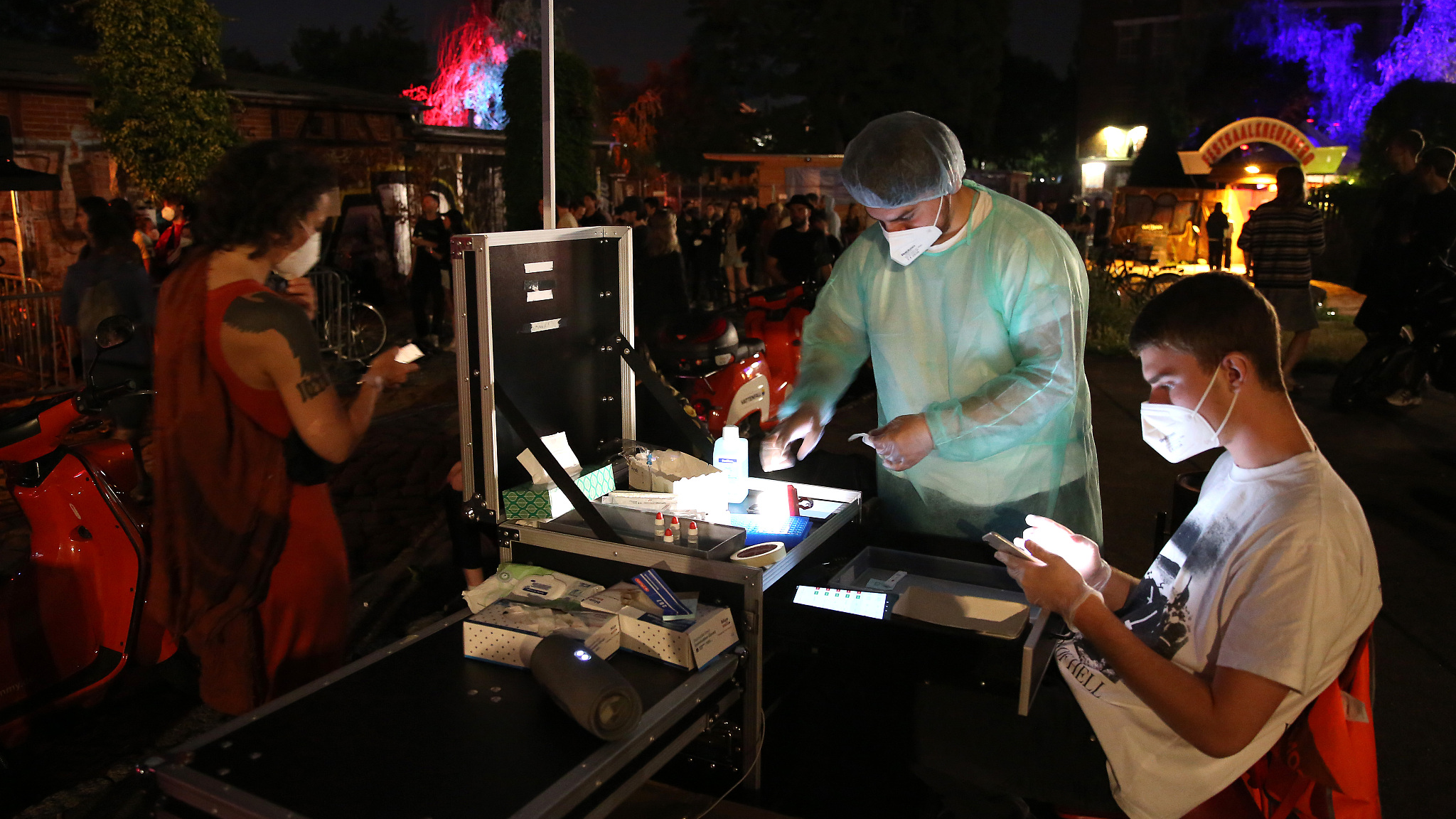
FILE PHOTO: A clubgoer gets a coronavirus (COVID-19) test prior to entering a nightclub in Berlin, Germany. /VCG
Germany will abolish free rapid testing to encourage people to get vaccinated as from October 11 as one of several new coronavirus regulations for the coming months.
German Chancellor Angela Merkel met with the country's 16 state leaders on Tuesday to deliberate on the measures.
The state leaders will wield the right to tighten the restrictions further if the infection rate is found to be out of control.
The measures are expected to remain in force in an effort to curb a rising case rate that is only expected to be exacerbated in the coming weeks as holidaymakers return from their trips.
Germany's incidence rate for every 100,000 people over a seven-day period has almost doubled in the past three weeks, with one in 10 regions now registering a rate of more than 35.
Once the measures come into force, persons who have not been vaccinated, with the exception of pregnant women, children or people advised against getting a vaccine on medical grounds – will have to pay for the tests. The hope is that people will stop depending on the test system as a means of avoiding getting a vaccine.
Persons who have not been vaccinated will have to undergo tests as a condition for attending a range of events, including indoor gatherings, restaurant visits and church services.
Wearing of masks in indoors spaces, like offices, schools and shops, and on public transport is expected to remain mandatory.
The government has argued that the measures are necessary to protect vulnerable people and the unvaccinated adding that it would review them as the situation evolves.
However, critics of the move have branded it a "vaccine mandate by the back door".
About 55 percent of Germans have received a full vaccination, including 80 percent of people older than 60, with 62.5 percent having received one dose. Merkel's administration had announced a target to have 85 percent of the population fully vaccinated by the end of the summer.
(With input from agencies)
