- Home
- China
- World
- Asia-Pacific
- Americas
- Europe
- Middle-East and Africa
- Politics
- Business
- Opinions
- Tech & Sci
- Culture
- Sports
- Travel
- Nature
- Picture
- Video
- Live
- TV
- Specials
- Learn Chinese


Share







Copied
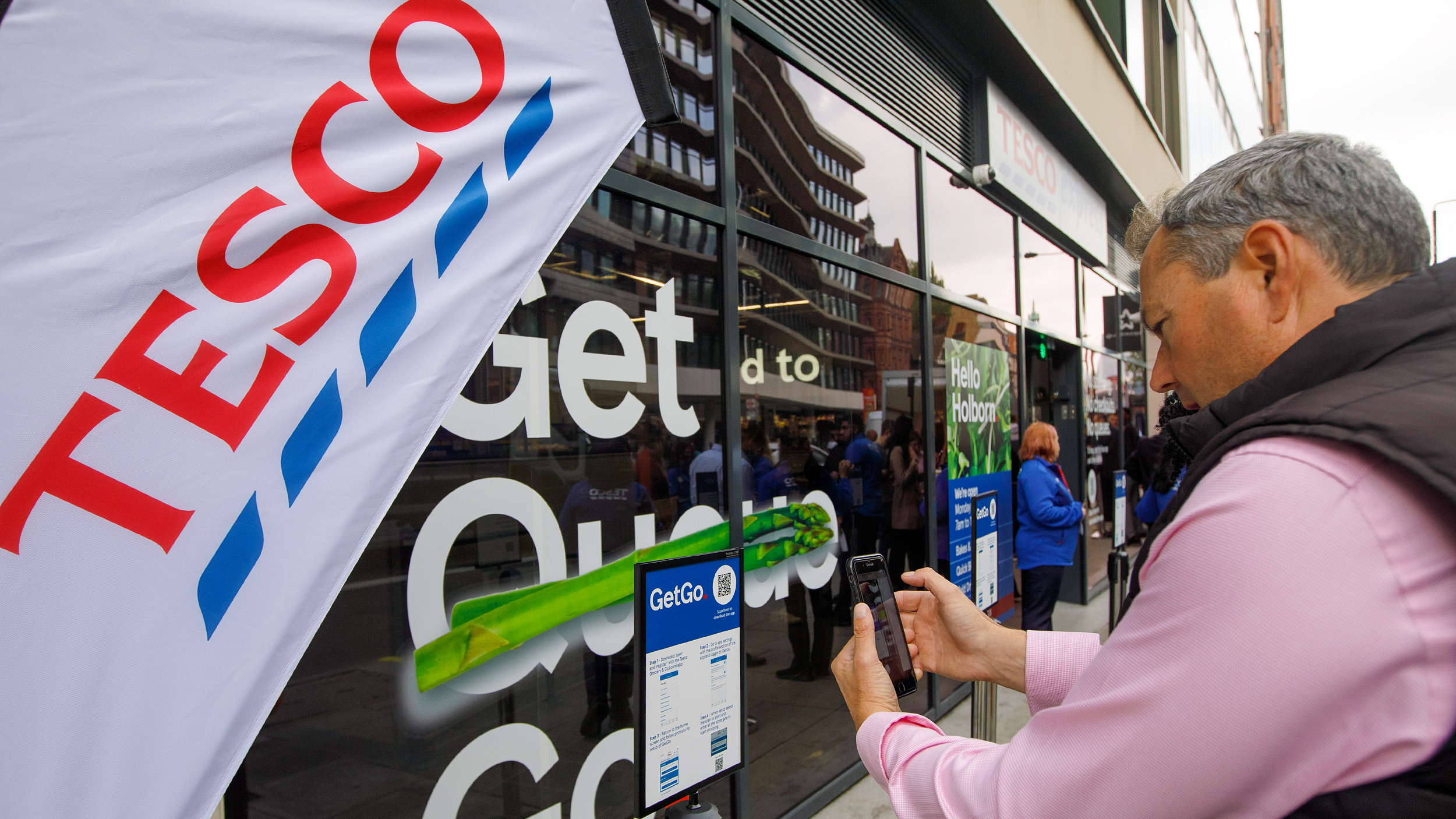
FILE PHOTO: A customer scans a QR code outside at the Tesco Plc cashierless concept store, called GetGo, in High Holborn, London, U.K. /CFP
The UK's gross domestic product (GDP) recorded a 1.3-percent quarterly rise in the third quarter as COVID-19 restrictions were further eased, the British Office for National Statistics said on Thursday.
Third quarter GDP was still 2.1 percent below where it was before the pandemic in the fourth quarter in 2019, the office said.
The output of the service sector grew by 1.6 percent in the third quarter when compared with the previous quarter, with 0.7 percent below fourth quarter 2019 levels, figures showed.
Meanwhile, production output increased by 0.8 percent in the third quarter, 2.1 percent below its pre-coronavirus pandemic levels. Construction output fell by 1.5 percent quarter-on-quarter.
Martin Beck, senior economic advisor to the EY ITEM Club, an economics forecasting group in Britain, said: "With the easy gains from reopening the economy exhausted and policy support being withdrawn, the recovery has entered a much tougher phase."
"However, while the pace of quarterly GDP growth is likely to continue to slow over the next few quarters, it should still compare favourably to the decade leading up to the pandemic, driven by some consumers and firms spending money they have accumulated over the past 18 months," Beck added.
James Smith, a developed markets economist at financial services firm ING, predicts economic growth to remain slow into the fourth quarter, forecasting the Bank of England, the country's central bank, would likely raise interest rates in December, "especially if the jobs data brings the committee good news."
"But the pace of tightening thereafter is likely to be cautious, and we expect a maximum of two further rate rises in 2022," Smith said.
Earlier this month, the Bank of England announced that it will keep interest rates unchanged at 0.1 percent despite widespread speculation that it will raise rates to contain rising inflation.
Annual inflation stood at 3.1 percent in September, and is expected to peak at around 5 percent in April 2022, the bank predicted, adding that the upward pressure on the consumer price index, a main gauge of inflation, is expected to dissipate over time.
The bank made two emergency base rate cuts from 0.75 percent to 0.1 percent to support businesses and households since the COVID-19 pandemic began.
