- Home
- China
- World
- Asia-Pacific
- Americas
- Europe
- Middle-East and Africa
- Politics
- Business
- Opinions
- Tech & Sci
- Culture
- Sports
- Travel
- Nature
- Picture
- Video
- Live
- TV
- Radio
- Specials
- Learn Chinese


Share







Copied
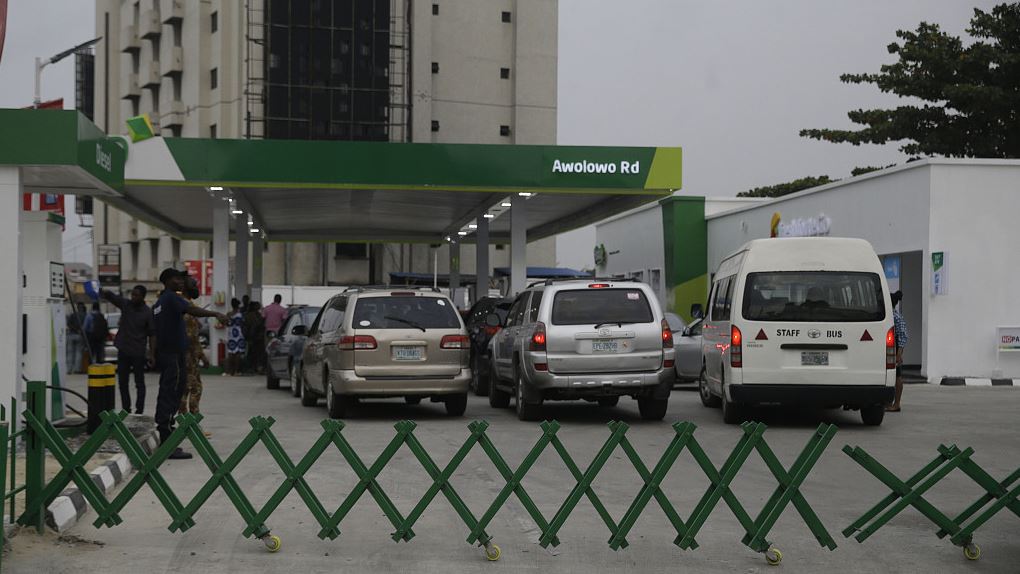
Cars line up outside a petrol station in Lagos, Nigeria, on February 18, 2022. (Photo by Sunday Alamba via CFP)
Nigeria plans to tap 2 billion euros ($2.2 billion) either this month or in April from its eurobond sale last year and target more local borrowing in 2022 to help fund its petrol subsidies as oil prices rise, Reuters reports citing the country's Finance Minister Zainab Ahmed.
"Rising oil prices has put us in a very precarious position ... because we import refined products ... and it means that our subsidy cost is really increasing," Ahmed said.
The West African country has been in the news this and last week for disruptions in travel, which have also hurt airlines forcing many flights to be rescheduled or cancelled.
Nigeria is Africa’s biggest oil producer and exporter but the West African country is forced to depend almost entirely on fuel imports because of its inability to refine most of its oil for use at home.
In a February letter to Parliament, President Muhammadu Buhari requested extra funds to pay for petrol subsidies.
The subsidies cost Nigeria up to $7 billion a year in revenue, Reuters reported.
