- Home
- China
- World
- Asia-Pacific
- Americas
- Europe
- Middle-East and Africa
- Politics
- Business
- Opinions
- Tech & Sci
- Culture
- Sports
- Travel
- Nature
- Picture
- Video
- Live
- TV
- Radio
- Specials
- Learn Chinese


Share







Copied
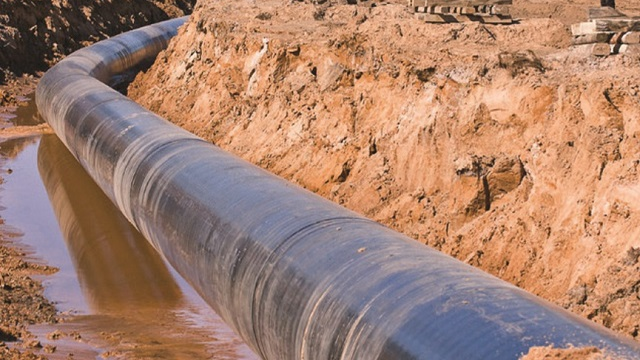
Algeria's natural gas pipeline. /Xinhua
The Spanish government said Thursday it will defend its national interests in the wake of Algeria's decision to suspend a 20-year-old treaty of friendship and cooperation and ban all non-gas trade with Spain.
Foreign Minister Jose Manuel Albares said his country was monitoring gas flows from Spain's second-largest supplier after U.S., but these were unaffected by the diplomatic row over Madrid's stance on the disputed territory of Western Sahara.
The European Commission's foreign affairs spokesperson Nabila Massrali said Algeria's decision was "extremely worrying" and called on the Algerian authorities to review it and work with Spain on solutions to their disagreement.
Algeria's banking association on Wednesday ordered stopping payments to and from Spain, which, according to Algerian sources, affects all trade except for gas supplies.
"We are analyzing the reach and the national and European consequences of that measure in a serene, constructive way, but also with firmness in the defence of Spain and the interests of Spaniards and Spanish companies," Albares told reporters.
Spanish exports to Algeria include iron and steel, machinery, paper products, food, fuel and plastics, while service exports include construction, banking and insurance business.
Algerian President Abdelmadjid Tebboune has previously said he would not break the supply contract over the row. Reuters has sought comment from Sonatrach.
Spain's Energy Minister Teresa Ribera was confident Sonatrach would respect its commercial contracts, but acknowledged that the diplomatic and trade spat comes at a delicate time as the prices of the 10-year supply contracts are now being revised by the companies involved.
North African gas supplies to Europe have grown increasingly important this year in light of Russia's military campaign in Ukraine.
Algeria was angered when Spain said in March it supported a Moroccan plan to offer autonomy to Western Sahara. Algeria backs the Polisario Front movement seeking full independence for the territory, which Morocco regards as its own.
The conflict flared again in 2020, nearly three decades after a ceasefire, leading Algiers to break off diplomatic ties with Rabat last year, when it also decided not to extend a gas export deal via a pipeline running through Morocco to Spain that made up nearly all of Morocco's gas supply.
Supplies, now using the remaining direct subsea pipeline and by vessel, have dropped to just over a quarter of Spain's gas imports in January-April, from nearly half a year earlier.
Algeria's treaty with Spain also committed both sides to cooperate in controlling migration flows, raising fears that its suspension could lead Algiers to relax its border controls and fuel a surge of arrivals to Spain as did a diplomatic row with Morocco last year.
(With input from Reuters)
