By continuing to browse our site you agree to our use of cookies, revised Privacy Policy and Terms of Use. You can change your cookie settings through your browser.
Fauci set to step down as NIAID head in December

Share







Copied
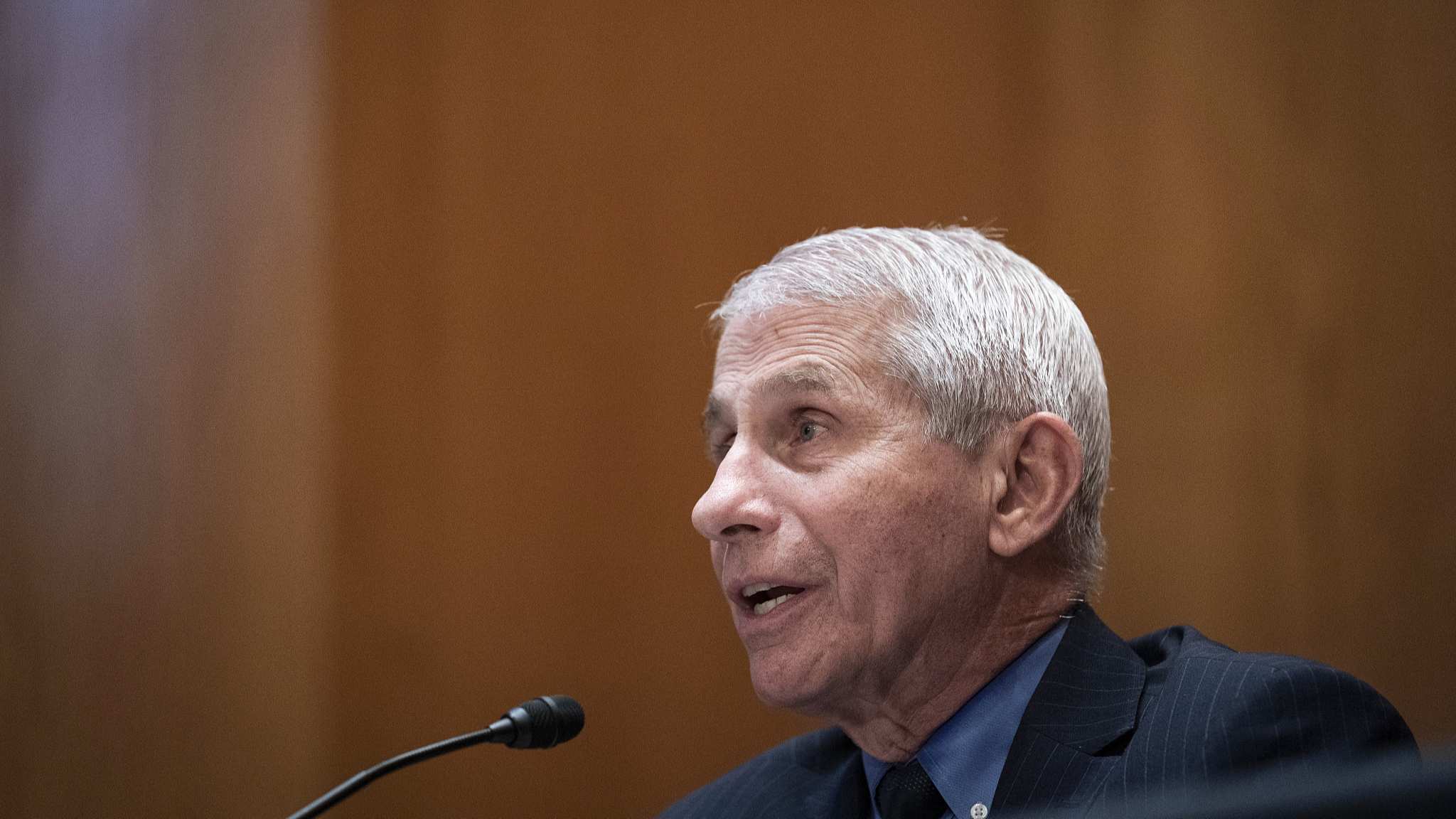
Anthony Fauci speaks during a Senate Appropriations Subcommittee in Washington, D.C., U.S., May 26, 2021. /CFP
The U.S. top infectious diseases expert, Dr. Anthony Fauci, will step down in December after more than 50 years of government service.
He will devote himself to dealing with another round of possible outbreak of the pandemic in the coming winter in the remaining months and help his institute to go through executive level transition smoothly.
"While I am moving on from my current positions, I am not retiring," Fauci said on Monday. "After more than 50 years of government service, I plan to pursue the next phase of my career while I still have so much energy and passion for my field."
The 81-year-old, who also serves as President Joe Biden's chief medical adviser, has been the director of the National Institute of Allergy and Infectious Diseases and chief of the NIAID Laboratory of Immunoregulation. His efforts in combating COVID-19 have been recognized and applauded by many public health experts and make him the most popular and trusted figure in the country.
However, Fauci endured criticism from various conservatives and even death threats against him and his family from people who objected to anti-pandemic measures such as vaccination, social distancing and masking.
This senior infectious diseases expert has served as an adviser to seven U.S. presidents focusing on newly emerging and re-emerging infectious disease dangers including HIV/AIDS, Ebola, Zika, monkey pox and COVID-19.
Today, the U.S. leads the world in recorded COVID-19 deaths with more than one million and in confirmed cases with more than 90 million. He called for multiple cautions against reopening the U.S. economy too soon and opposed the use of unproven treatment and publicly rejected then-president Donald Trump's statement about the pandemic.
Search Trends
SITEMAP
Copyright © 2023 CGTN. 京ICP备16065310号

Disinformation report hotline: 010-85061466
SITEMAP
Copyright © 2023 CGTN. 京ICP备16065310号
Disinformation report hotline: 010-85061466