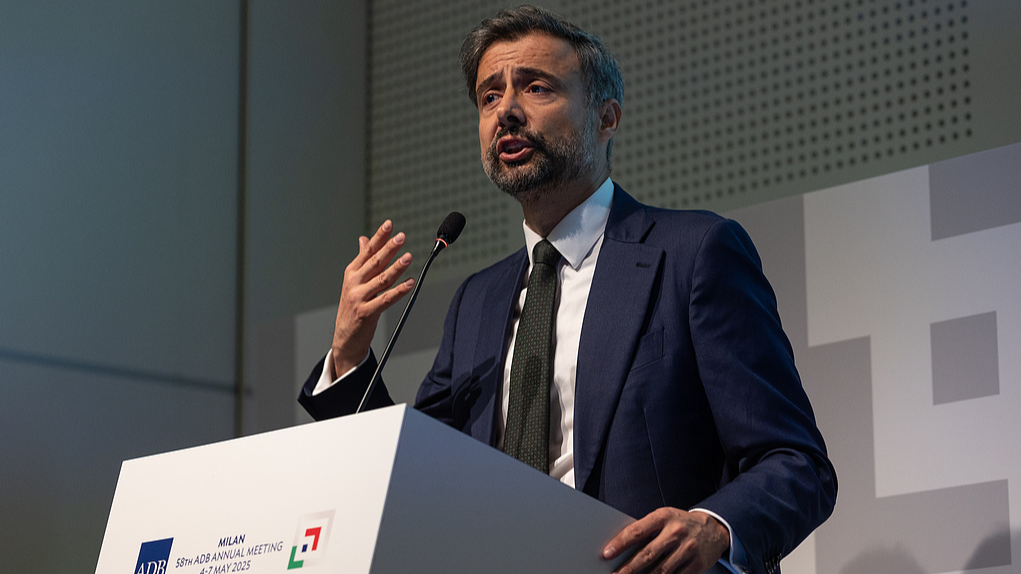
Alvaro Lario, president of the International Fund for Agricultural Development, delivers a speech while attending a panel during the Asian Development Bank's 58th annual meeting in Milan, Italy, May 6, 2025. /CFP
Conflict and disruptions to global energy markets could push 9 million to 18 million more people into hunger by driving up fuel, fertilizer and food costs, the head of the International Fund for Agricultural Development (IFAD) warned, as a new UN report found Africa has overtaken Asia as the region with the largest number of hungry people.
Released Tuesday, the report released projects that more than 500 million people could still face chronic hunger by 2030, with nearly 60% expected to live in Africa.
IFAD President Alvaro Lario said conflicts, rising energy costs and climate shocks are threatening to reverse recent gains against hunger. He warned that disruptions to shipping and energy supplies could sharply increase food prices, hitting small-scale farmers and vulnerable households hardest.
The report found that about one-third of the world's population cannot afford a healthy diet, rising to 77% in low-income countries. Lario said the growing burden on Africa reflects persistent conflict, rapid population growth and underinvestment in agriculture, noting that the continent imports nearly $100 billion worth of food each year.
He urged governments to invest in more resilient food systems, warning that without stronger action, conflict, climate extremes and volatile energy markets could deepen the global hunger crisis.